
Important Safety Info for GLP-1s
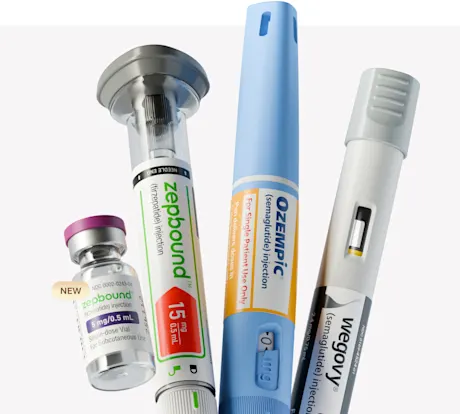
See Important Safety Information, including Boxed Warning, about:
- Wegovy (semaglutide) injection
- Zepbound (tirzepatide) injection
Important Safety Information for Wegovy (semaglutide) injection
Warning: Risk of Thyroid C-Cell Tumors
In studies with mice and rats, semaglutide (the active ingredient in Wegovy and Ozempic) caused thyroid tumors, including thyroid cancer. It is not known if Wegovy will cause thyroid tumors or a type of thyroid cancer called medullary thyroid carcinoma (MTC) in people. Tell your provider if you get a lump or swelling in your neck, hoarseness, trouble swallowing, or shortness of breath. These may be symptoms of thyroid cancer.
Do not use Wegovy if you or any of your family have ever had a type of thyroid cancer called medullary thyroid carcinoma (MTC) or if you have an endocrine system condition called Multiple Endocrine Neoplasia syndrome type 2 (MEN 2).
What is the FDA-approved use of Wegovy?
Wegovy is used along with a reduced-calorie diet and increased physical activity for chronic weight management in adults with obesity or with overweight plus a weight-related condition.
Wegovy is also used to reduce the risk of major adverse cardiovascular events (cardiovascular death, non-fatal myocardial infarction, or non-fatal stroke) in adults with known cardiovascular disease and with either obesity or overweight.
Limitations of Use:
Wegovy should not be used in combination with other semaglutide-containing products or any other GLP-1 receptor agonist
Who should not use Wegovy?
Do not use Wegovy if:
You or any of your family have ever had a type of thyroid cancer called medullary thyroid carcinoma (MTC) or if you have an endocrine system condition called Multiple Endocrine Neoplasia syndrome type 2 (MEN 2).
You have a known allergic reaction to semaglutide (the active ingredient in Wegovy or Ozempic).
How should Wegovy be administered?
You can take Wegovy with or without food. The pre-filled injector pen is self-administered as a subcutaneous injection in the stomach, thigh, or upper arm once a week on the same day every week. Your VitalHealth-Prosper’s provider will guide you on a treatment regimen that may include an increase in dose every four weeks.
You should not change your dosing regimen or stop taking Wegovy as prescribed without discussing with your provider first.
What should I tell my VitalHealth-Prosper provider before using Wegovy?
Wegovy has certain drug interactions. It’s important to tell your VitalHealth-Prosper’s provider all of the medications you are currently taking, including prescription, over-the-counter medications, vitamins, and herbal and dietary supplements.
Some medications to watch out for include:
Medications used to treat type 1 or type 2 diabetes, including insulin or sulfonylureas (such as Amaryl or Glucotrol XL)
Other GLP-1 medications in the same class (Ozempic, Saxenda, Victoza, Byetta, Bydureon)
Other weight-loss products, including dietary supplements
It’s important to share your entire medical history with your provider. In particular, tell your provider if you have a past history of:
Type 1 or type 2 diabetes
Thyroid cancer
Pancreatitis
Kidney disease
Diabetic retinopathy
Depression
Suicidal thoughts or behavior
Tell your provider if you are pregnant, planning to become pregnant, or breastfeeding.
Pregnancy: Wegovy should not be used during pregnancy.
Breastfeeding: Wegovy was found in the milk of lactating rats. Tell your Vital Health Prosper provider if you are breastfeeding before you start Wegovy.
Pregnancy registry: Pregnant women exposed to semaglutide and healthcare providers are encouraged to contact Novo Nordisk at 1-877-390-2760 or www.wegovypregnancyregistry.com.
Important Safety Information for Zepbound (tirzepatide) injection
Warning: Risk of Thyroid C-Cell Tumors
In rats, Zepbound caused thyroid tumors, including thyroid cancer. It is not known if Zepbound will cause thyroid tumors or a type of thyroid cancer called medullary thyroid carcinoma (MTC) in people. Tell your provider if you get a lump or swelling in your neck, hoarseness, trouble swallowing, or shortness of breath. These may be symptoms of thyroid cancer.
Do not use Zepbound if you or any of your family have ever had a type of thyroid cancer called medullary thyroid carcinoma (MTC) or if you have an endocrine system condition called Multiple Endocrine Neoplasia syndrome type 2 (MEN 2).
What is the FDA-approved use of Zepbound?
Zepbound is used along with a reduced-calorie diet and increased physical activity for chronic weight management in adults with obesity or with overweight plus a weight-related condition.
Limitations of Use:
Zepbound should not be used in combination with other tirzepatide-containing products or any other GLP-1 receptor agonist.
Who should not use Zepbound?
Do not use Zepbound if:
You or any of your family have ever had a type of thyroid cancer called medullary thyroid carcinoma (MTC) or if you have an endocrine system condition called Multiple Endocrine Neoplasia syndrome type 2 (MEN 2).
You have a known allergic reaction to tirzepatide.
How should I take Zepbound?
Zepbound is available as a single-dose pre-filled injector pen or as a single-dose vial with syringe and needle. Both are self-administered as a subcutaneous injection in the stomach, thigh, or upper arm once a week on the same day every week.
You can take Zepbound with or without food. You should not change your dosing regimen or stop taking Zepbound as prescribed without discussing with your provider first. Your VitalHealth-Prosper’s provider will guide you on a treatment regimen that may include an increase in dose every four weeks.
What should I tell my VitalHealth-Prosper’s provider before using Zepbound?
Zepbound has certain drug interactions. It’s important to tell your VitalHealth-Prosper’s provider all of the medications you are currently taking, including prescription, over-the-counter medications, vitamins, and herbal and dietary supplements.
Some medications to watch out for include:
Diabetes medications (insulin, sulfonylureas)
Hormonal birth control (oral contraceptives may be less effective)
Other GLP-1 medications (Mounjaro, Wegovy, Ozempic, Saxenda, Victoza, Byetta, Bydureon)
Other weight loss products (including supplements)